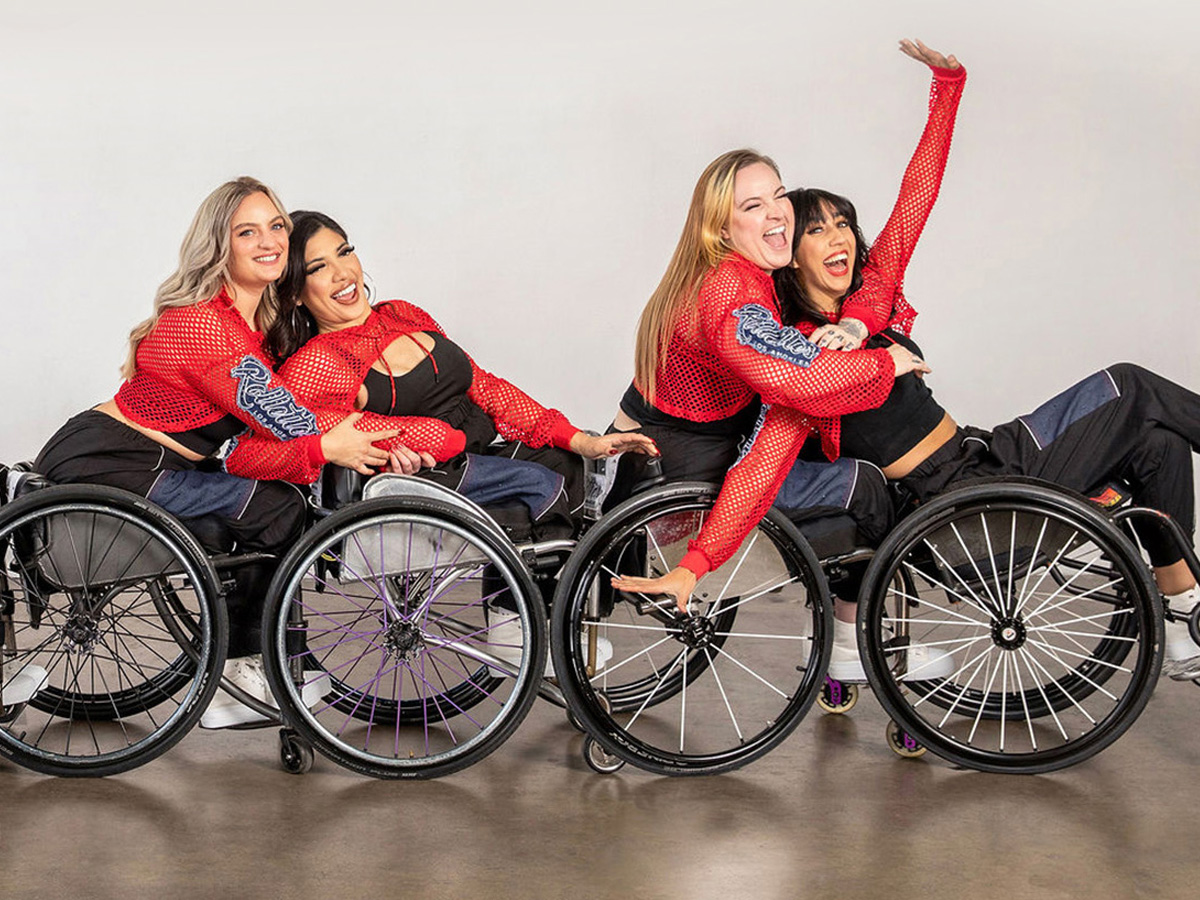
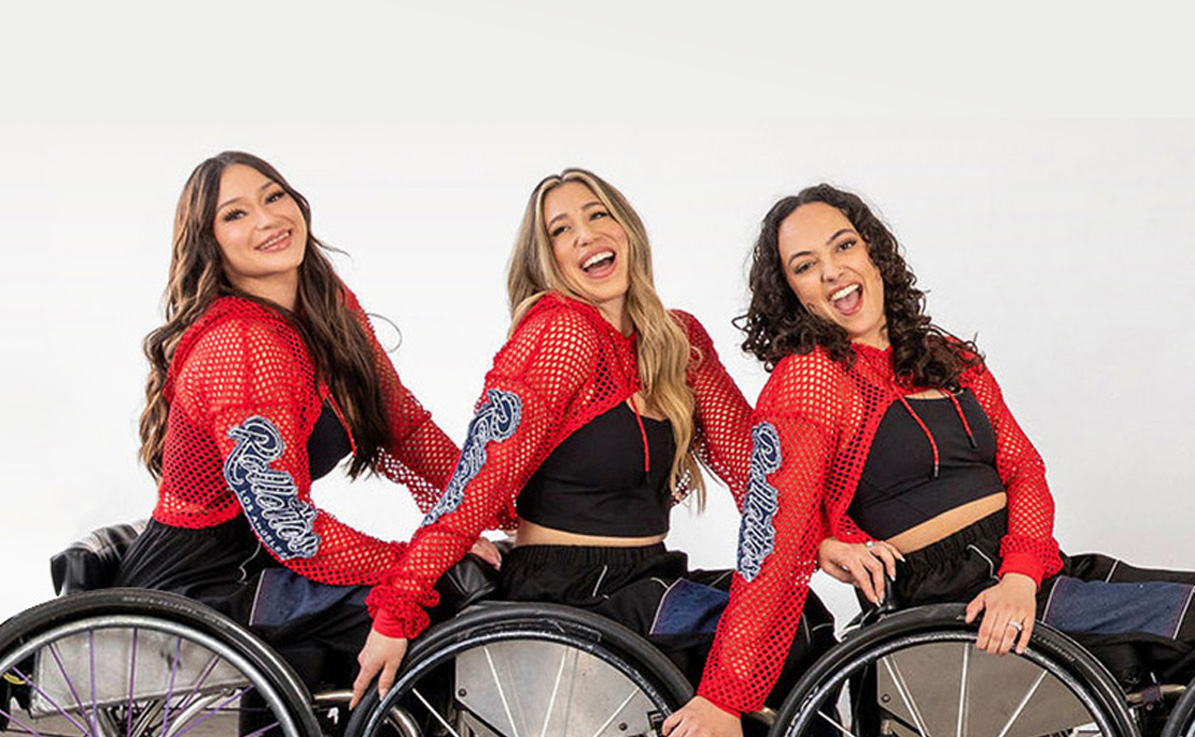
One night, while out with friends at the age of 17, Chelsie got into a car with someone who had been drinking. Life changed forever when the car hit a tree head-on, and she was instantly paralyzed from the waist down. Her injury tried to steal her love of dance, but she didn’t give in. Instead, she’s created the Rollettes, a world-renowned wheelchair dance team and community for women living with disabilities to connect and dance together. It’s become her life’s work.
Abilities: Your bio talks about bold impact and radical inclusion. It suggests that your approach after your injury and the formation of the Rollettes redefined dance. Can you please explain?
Chelsie: Inclusive choreography is built for real bodies from the start, not “adapted” at the end. It creates multiple ways to do the same moment (wheels, arms, levels, tempo), uses safe partnering, and stages dancers so disability isn’t hidden. It’s not watered down, it’s expanded.
I use art to make people feel something first, then that opens the door for change. Being visibly disabled on stage, owning space, and showing joy and power is advocacy. And offstage, I use the platform to push for access, representation, and community.
Abilities: Can you tell us about your new foundation?
Chelsie: After my injury, dance became part of how I rebuilt my confidence and my identity. Over 12 years it grew from personal healing into a community for other disabled women and girls.
The Rollettes Foundation expands that mission, creating access, support, and spaces where disabled people feel seen, celebrated, and included for real.
Abilities: You’re a wife and mother as well as a business woman. What does your day-to-day life look like?
Chelsie: It’s honestly a mix of mom chaos and CEO brain. I’m getting my daughter ready, doing the million tiny things that keep a household moving, and then flipping straight into running a nonprofit, building community, and creating content. I’m in meetings, answering messages, planning events, and squeezing in movement, gym or dance, because it keeps me grounded. It’s busy, imperfect, and really full, but I try to keep it centered on presence and connection with my family.
Abilities: Recognition has been a reward for your efforts—the cover of Women’s Health, a Lady Gaga music video… Do you feel you are well-known now? How is that helping your advocacy work?
Chelsie: I don’t always feel “well-known,” but I know my story and platform have reached a lot of people, and I’m grateful for that. The recognition helps because it opens doors, media, brands, stages and rooms that I might not have had access to in the past.
Try to use those moments and opportunities to shift how people see disability is key—it’s not a tragedy, but a normal life that’s powerful and beautiful.
The greater the Rollette’s visibility and the more I’m out there, the more I can advocate for real inclusion, and bring other likeminded women with me.
Abilities: Let’s talk about performing at the Paris Paralympics Opening Ceremony….
Chelsie: What an honour and what a thrill. It was surreal, one of those “is this real life?” pinch me moments. Seeing disability celebrated on a global stage, felt both powerful and emotional. The energy was phenomenal—the hours in rehearsal with all the dancers, trying on the different costumes, meeting other athletes/performers, rolling into the stadium, hearing the crowd, seeing the lights…WOW.
I was one of the first dancers on stage for opening ceremony and I got to hear the cheering and look at the crowd, I even saw the Eiffel Tower sparkle during the performance.
Abilities: Were there difficult parts of being at “The Games”?
Chelsie: The schedule and physical demands were intense, days were long, the stage was huge and there was plenty of waiting and lots of moving parts.
I was paid by the organization which really helped to cover my time and expenses as a specialty performer and a provider of advice on movement.
Travel/access logistics can be complicated in any major production, so there were definitely moments where I had to advocate for what I needed while still staying present for the experience.
Something is always going to happen or be challenging but being able to have a team that was willing to do anything to work with what we wanted to do made a huge difference. The staff and team made all the accommodations so seamless and they were all open to always assisting with everything.
Abilities: As a strong voice for authentic and meaningful representation in media, dance, and fashion, you’ve made your mark with brands like Reebok, Disney, Dove, and Target. How has that happened?
Chelsie: By showing up consistently and telling my truth, about disability, dance, fashion, and motherhood, and building a community that trusts me and has grown with me.
The best brand partnerships happen when companies want real representation, not a “moment,” and when I’m able to advocate for accessibility and creative control so it feels authentic!
Abilities: Please share what you’ve learned about the good, the bad and the ugly of disability related marketing?
Chelsie: Good is when disabled people are centered with joy and style, paid fairly, included behind the scenes, and accessibility is actually built in.
Bad is when disability is treated like a checkbox or an “inspiration story” instead of real life.
Ugly is when ‘tokenized’ disabled bodies are used for appearance or clout while disabled voices, access needs, and long-term commitment are being ignored.
Abilities: There’s been a lot of DEI pushback from a variety of sources with some corporations deciding to abandon their initiatives. Have you felt that at all in your work?
Chelsie: Yes, I’ve felt a shift. Some brands have gotten quieter and started treating inclusion like a risk.
But disability isn’t a trend, it’s real people and real community. I’d rather partner with brands that are in it for the long haul results: increased accessibility, recognition of disabled skill and talent, and consistent representation.
If anything, the pushback makes this work more important. If companies pull back, our visibility can’t.
Abilities: As a brand supporter, how do you make your appearances genuine and not too staged and how do you feel the general public responds?
Chelsie: I’ve honestly never thought about how to “keep” it genuine. I just show up as me. I share real life when I feel like I can, I use my real voice, and I only say yes to partnerships that actually fit my values and feel good for my community. I also stay involved creatively so it doesn’t feel like I’m being used as a prop.
And people can tell. The community responds best when it feels authentic, when disability is shown with confidence, humour, style, and real humanity, not as a staged inspiration moment.
Abilities: How do you feel you’ve been able to influence marketers and brands?
Chelsie: I think I’ve influenced brands by raising the standard for what “inclusive” actually looks like. I’m truthful, I ask better questions, and I push for representation that feels real, not DEI tokenism.
I also don’t settle for making a brand stay in their comfort zone just to keep the brand working with me. If it’s not authentic for me it won’t be for my community and my audience.
Abilities: The Rollettes Experience that you hosted last July sounds very unique.
Chelsie: Yes it is. I have hosted the 4-day Rollettes Experience every year since 2012 because disabled women deserve a space that feels like belonging, not just access!
It’s part dance, part empowerment, part community, and frankly it’s life-changing to be in a place where you don’t have to explain your body.
The experience is funded through a mix of sponsorships, ticket/registration revenue, and donations that help us keep it as affordable as possible.
Dance is a big piece of it, but you don’t need to like to dance to come. There are panels, workshops, and community events too. It’s disability-centered, but it welcomes a wider audience: wheelchair users, other disabled people, allies, families, and caregivers. The goal is inclusion without watering down who
it’s for.
For 2026 we are continuing across America, Houston in May, Los Angeles in July and New Jersey in August! We’d love to bring it to Canada.
Abilities: What’s the biggest lesson you’ve learned as a performer and an advocate?
That visibility matters. The biggest lesson is that I don’t need to shrink myself to make other people comfortable. When I show up fully, it gives other people permission to do the same, and that’s where real change starts.
Chelsie Hill is a professional dancer, community leader, content creator, and Founder/CEO of Rollettes,
a Los Angeles based wheelchair dance team that’s committed to education, disability representation, and female empowerment.
Photos: Chelsie Hill